
5 Steps to Find Your Target Audience (With Examples!)
If you’re trying to please everyone, you’re pleasing no one. Right? It’s also true for your marketing: If you’re trying to reach everyone, you’re going to reach no one. People might see your ad or take a look at your website. But your ad and your message won’t resonate with anyone if you don’t have a specific audience in mind.

That’s why it’s essential to find your target audience—and start using it right away. So in this guide, we’ll give you all the information and the steps you need to do just that.
Table of contents
What is a target audience?
A target audience is the specific group of people that you want to reach with your marketing. That means your marketing collateral—from your email copy to your tagline to your brand story—should appeal to this group of people.
Here’s a great example of a targeted marketing campaign, including the video and the messaging, from AirBnB.
The voice in the video is young and impassioned. The imagery isn’t highly produced. Instead, it looks almost like a great iPhone video taken in the moment. This is clearly targeted to an audience of younger adults seeking authentic, spontaneous experiences when they’re traveling. And it works.
That’s why it’s so important to find your target audience. If you want your marketing to appeal to this group of people, you need to make sure you create everything with them in mind.
Target audience vs target market
We need a quick clarification of terms here: Your target audience isn’t your target market. Your target market is the specific group of people that your product or your service is intended for. Your target audience, on the other hand, is the specific group of people that your marketing is trying to reach.
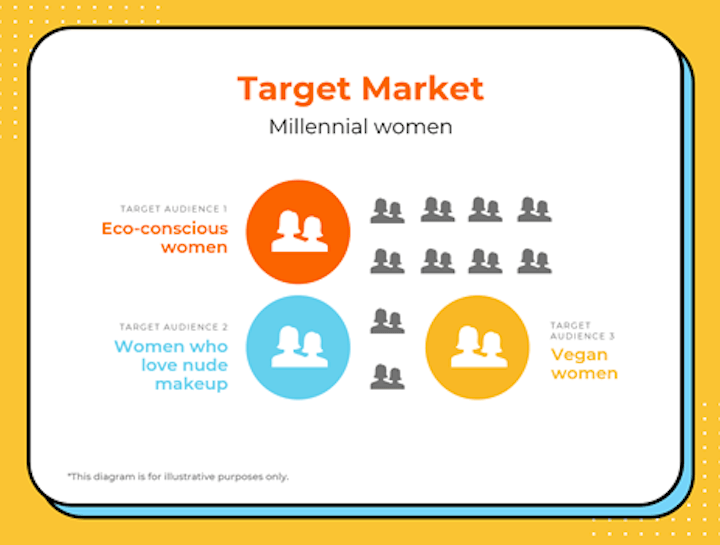
For example, let’s say your product is dog gear—harnesses, bowls, leashes, toys. Your target market in this case is people with dogs. In order to reach your target market, you might have user-generated content in your social ads featuring happy customers, a newsletter with top dog stories of the week, a blog on pet care, and whitepapers for first-time pet owners. Your branding is sleek, modern, and minimal. Your target audience for this marketing campaign isn’t just pet owners; it’s young Millennials or Gen Zers who have their first dog.

Wild One’s landing page is super well targeted—the branding, the copy, even a toy specifically positioned for WFH pet parents.
Notice above how I said “this marketing”? That’s right. You could have a different set of marketing campaigns targeted at, say, families with a dog, or owners of multiple dogs, or even people who foster rescue dogs. In fact, HubSpot found that most marketers create content for multiple audiences, with three target audiences being the most common.
Types of target audiences
Your business can have a bunch of different target audiences, since these will align with the focus of your marketing efforts and your goals. In some marketing campaigns, you might get super-specific. If you run a landscaping business, for example, that could mean focusing on all your customers in one town with one event or discount to improve your customer base in that one area.
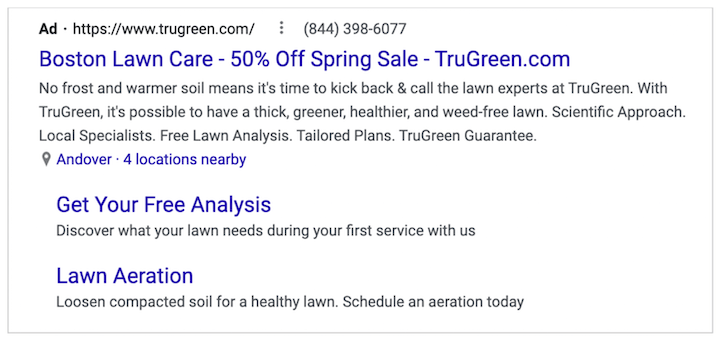
TruGreen, a Tennessee-based company, targets new customers in Boston with this Google Ad and the accompanying discount.
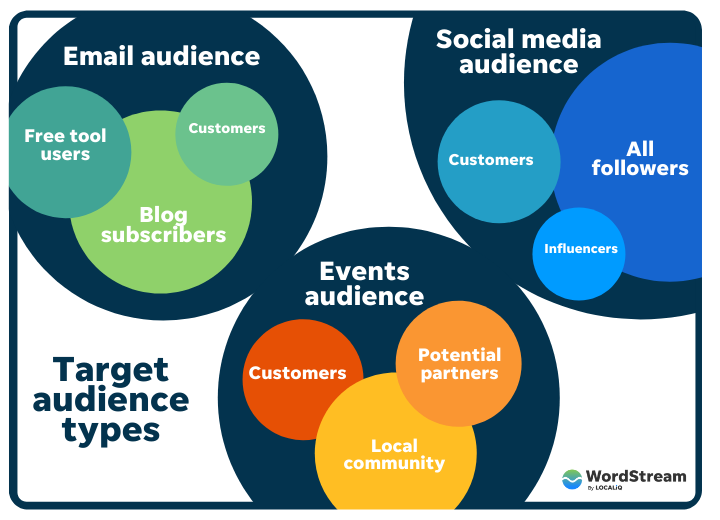
When you’re working to identify your target audiences, though, you’ll want to focus on the types that align with the marketing channels you focus on regularly. Here are some examples:
- Email: You might have a newsletter with tips that targets your general target audience, nurture email flows that target leads, and/or trigger emails aimed at current customers.
- Event: You might host an event for an entire community, like in the landscaping company example above, or instead one that caters to potential customers. You could even throw an event for current customers or prospective partners.
- Community: You might run a slack or Discord group that connects prospective customers in similar roles, or a similar community that connects customers using your product.
- Ad: You could run Facebook Ads encouraging return customers, Google Ads targeted at prospects searching for a solution, or Instagram shopping ads targeting your competitor’s customers.
- Social media: You might share a thought leadership piece aimed at influencers who would share it, a how-to video for your potential customers, or you could host a series of interviews with figures notable for your audience—whether those are authors, celebrities, or experts.
How to find your target audience
If you’re not incredibly clear on who your target audience is—for your branding in general, for a specific marketing channel, or for a certain campaign—you need to take a step back to identify it. You can determine who your target audience is by looking at who is engaging with your product, your brand, and your marketing. Here’s how:
- Interview your customers
- Audit your social following
- Review your marketing performance metrics
- Take notes on your competition
- Define who your target isn’t
Now, let’s take a closer look at each.
1. Start with your customers
Your customers are the people who are using your product or service, so clearly, the positioning of your offering, the solution you presented, your marketing, or a combination of these worked. That’s why this is the perfect place to start.
First, look at the demographics of your customers—what are their job titles, where do they live, how old are they? Are there any patterns that emerge as you do so? Pay careful attention to patterns with your loyal, repeat customers. Then see if there are patterns in your one-time customers.
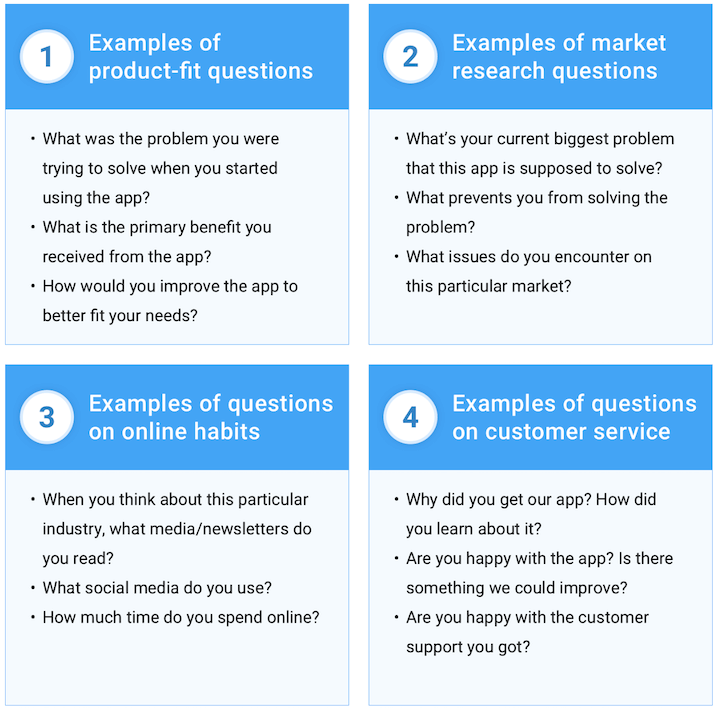
Next, it’s time to talk to your customers. This is the best way to get an idea of why they love your brand, your product, or team. That’ll help you with your positioning, including the benefits you’ll highlight in your copywriting and conversations.
Plus, it’s a great time to ask where your customers are spending their time and getting advice. Is it certain Instagram influencers, industry newsletters, or trusted company blogs? These customer insights are great data points to have, because you can prioritize these channels for your marketing.
2. Look at your social followers
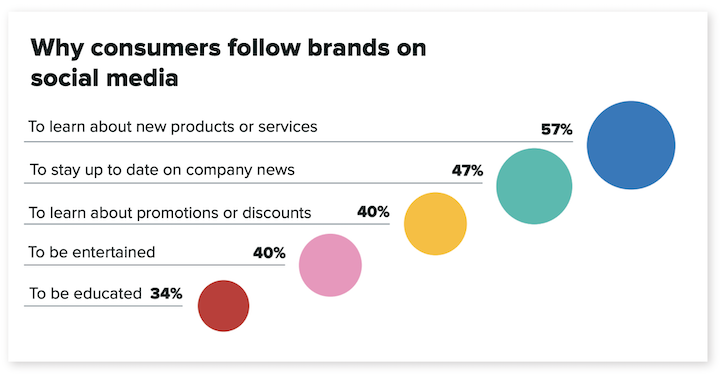
Your social followers are another existing audience that you can look at to see who your current marketing is appealing to. Even more, it gives you an idea of the consumers genuinely interested in your brand. According to Sprout Social, the most common reasons people follow brands on social channels are to get access to discounts, to keep up with company news, and to find out about new products or services.
You won’t have the same access to your social followers as your customers. If you still want to do an interview, make sure it’s a quick survey with super specific questions. Otherwise, focus on demographics and behavior. Here are some things to consider:
- Location
- Age
- Career
- Household income
- Activity level
- Other brand followings
Again, you want to pay special attention to the people engaging more with your social profiles.
The good news is that you can use a tool—even a free tool—to analyze this data. Buffer, for example, also offers a free tier.
3. Dig into your content analytics
The next existing audience you need to take some time to dig into is your website visitors. Who is reading your content already? Who is downloading your whitepapers? Who is engaging with your videos?
Google Analytics is the natural place to start when you’re looking for this type of information. YOu can learn:
- Demographics. See how your users break down by location, including country and city.
- Where users are coming from. Is Twitter a big referral source? Is it a niche industry news site? A certain blogger? This gives you more information about where to target your marketing campaigns.
- Which topics resonate with them. What is and isn’t of interest to your website visitors can provide clues on who your target audience is and how to appeal to them.
- What terms they’re searching. Find out what they’re looking up in Google that is leading them to your site.
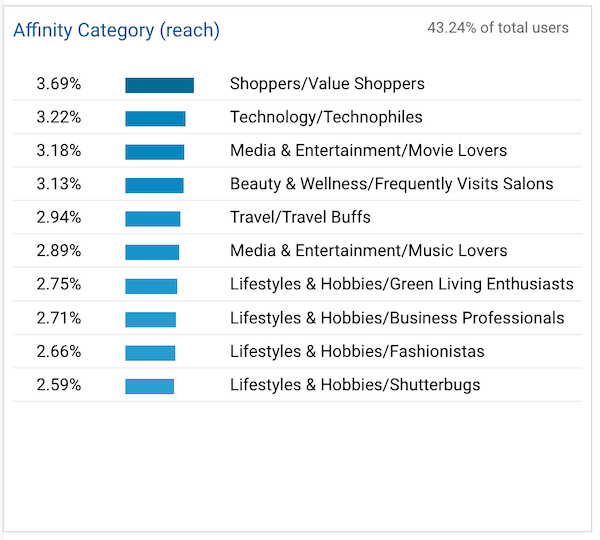
There’s even an Interests tab where you can look at affinity categories and in-market segments:
4. Check out your competitors
You have competitors. Regardless of your product, your offering, and target audience, you have competition. And you can use them.
Take a look at who your competitor is targeting in their marketing. Where are they advertising? Facebook? Instagram, or Twitter? Who are they addressing in their ads? What pain points are they stressing? Analyze their ads, their messaging, and their brand to put together a target audience and see how it compares with yours—including how it overlaps and how it differs. The overlap might help you see, and the difference? That’ll help you better articulate your brand’s differentiation.
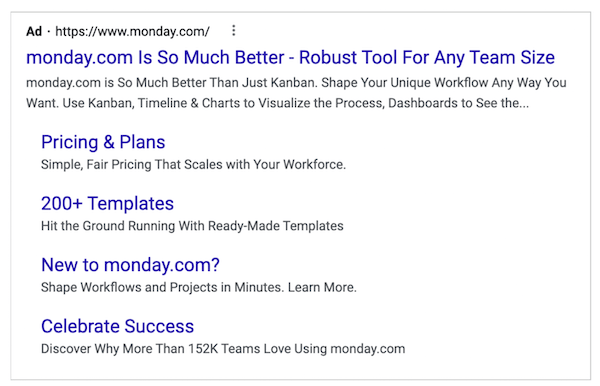
Here, monday.com clearly identifies the difference between its target audience and Trello’s: marketer on bigger teams, in charge of more projects, who get started ASAP.
In addition to the audiences your competitors are targeting, you want to know which of those audiences is actively engaging with its content. Duve into its social following to similarly identify the overlap and the difference. For a step-by-step process, check out our guide to competitive analysis on search and social.
5. Set your parameters
This last step might seem like an outlier in the process, but it is super important: You need to identify who your customer isn’t. Take the monday.com competitive ad example above. The team clearly decided who their audience is—and who their audience isn’t. Their audience isn’t someone looking for a simple, free Kanban solution. (That’s what Trello’s for.)
So for this step, take a look at all of your information—your customer interviews, your social following, your website visitors, and your competition’s comparable audiences. Then identify the gaps that you definitely don’t serve.
- Are you a pet store that doesn’t stock reptile tanks? Your target audience does not include iguana owners.
- Are you selling boozy milkshakes? You’re not trying to target anyone under 21, even if that might be hard to tell in your images.
- Can you only serve US customers? Then your target audience is not anyone operating outside of those bounds.
Setting your parameters will help guide your marketing—and even your business strategy.
Creating your target audience profile
After you’ve aggregated all the data about your followers, all the anecdotal information about your customers, and all the details from your competition, the final step is to put it together in a target audience profile.
Here’s some information to include:
- Location
- Age
- Gender identification
- Job title
- Industry
- Education level
- Household income
- Interests
- Hobbies
- Platform usage
Your target audience profile will include specifics that are relevant to your brand, too. Here are some examples of target audience profiles:
- First-time urban dog owner
- College senior without a career plan
- Trained chef working outside the industry
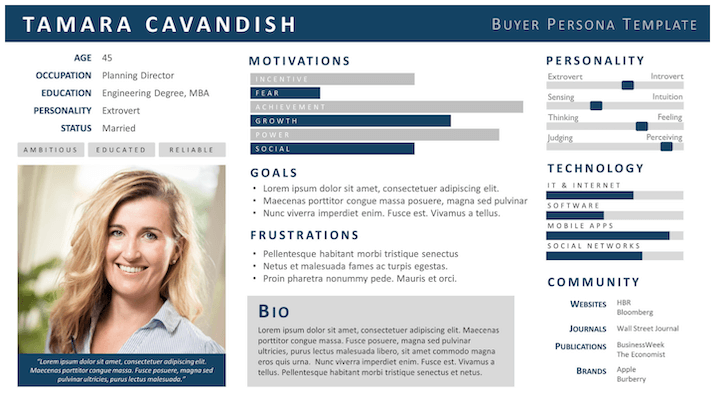
And with this information, you’ll want to develop personas to share with your team. These are detailed, fictional characters that make up certain buyers within your target audience
Target audience examples
Let’s finish off with some examples of target audiences for brands we’re familiar with, to help you firm up your understanding on this concept.
Nike target audience
When looking at Nike vs Under Armour, we can see that while the target market for both brands is people who wear sport and athleisure wear, there are several key differences in their target audiences. Nike is a higher-end brand whose marketing targets influential individuals in society and people up to 55 years old. Under Armour, on the other hand, is not for high-end earners, has a mostly male audience, and targets the 18-25 Gen Z demographic.
Starbucks target audience
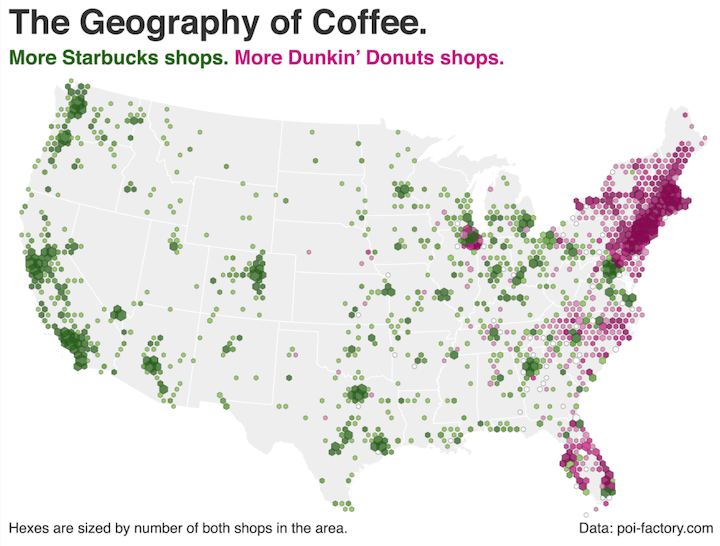
Let’s compare Starbucks vs Dunkin. Starbucks’ target audience is mainly college students and professionals with higher income. With its in-store merchandise, healthy snacks, comfy couches, and free WiFi, it targets people who want to sip their coffee while working, conversing with someone, or enjoying some alone time (and saving the planet).
Dunkin, on the other hand, has minimal in-store experience and lower price points, targeting people on the go (America runs on Dunkin, after all) and with lower budgets. It’s also prevalent in the eastern half of the U.S.
Define your target audience—and use it
Having a clear picture of your target audience is key, but it’s not the final step. In order to make your marketing more effective, you need to make sure everyone on your team has these profiles in mind. So once you’ve got this definition, share it widely so that everything your business puts out there can cater to who matters most.


